How we move affects how we feel. And it affects the people around us, too. Calm is contagious. So is rushing. If you've ever walked into a room where everyone was frantic, you know how fast that feeling spreads. The reverse is also true — and that's really what this talk is about.
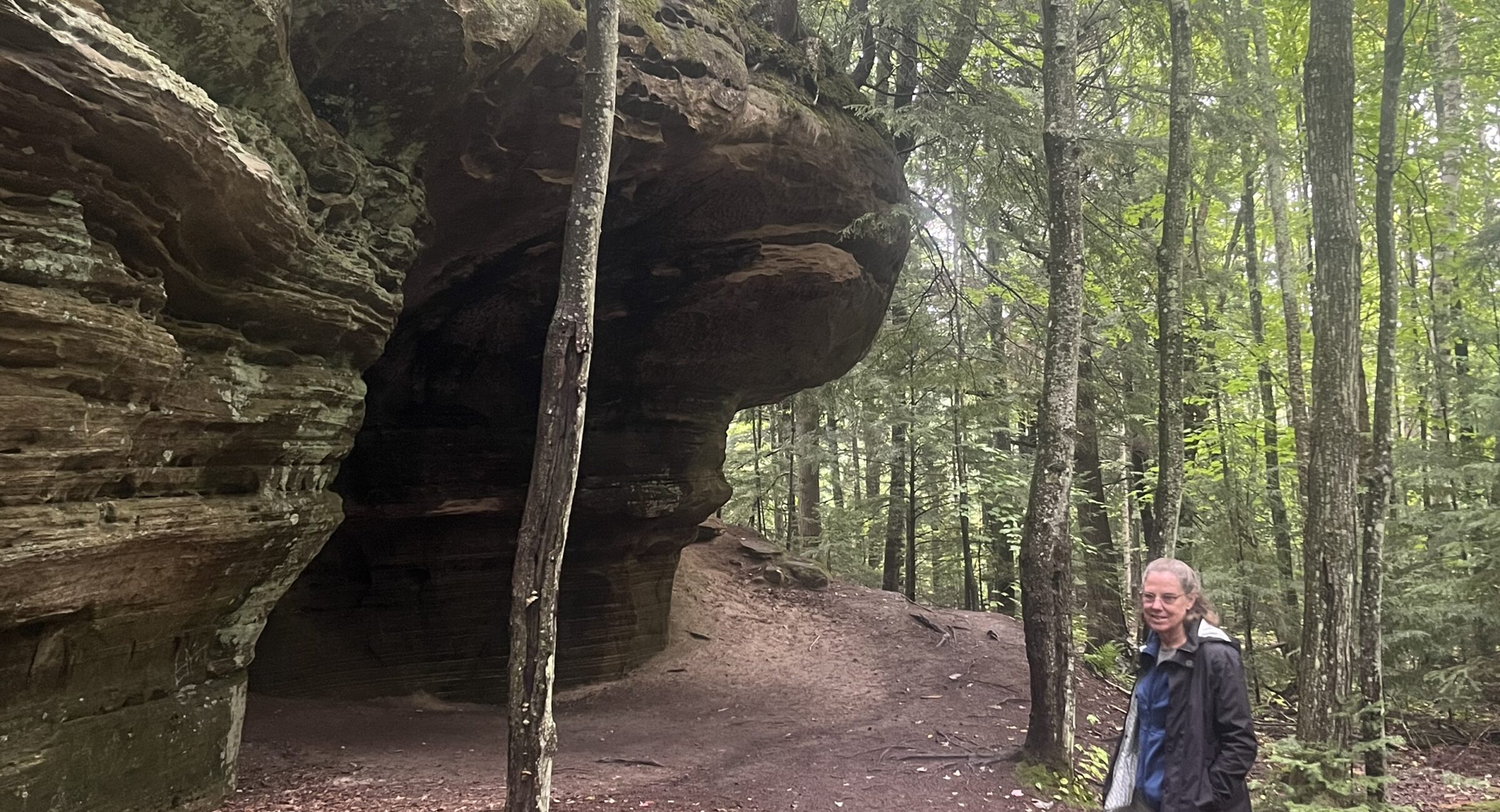
I want to start with something I've been thinking about a lot lately: how we move through the world. Not in some abstract sense — literally. How we walk. How we sit. How we stand. How we hold our bodies as we go through an ordinary day.
Here's what I've come to believe: how we move affects how we feel. And it affects the people around us, too. Calm is contagious. So is rushing. So is tension. If you've ever walked into a room where everyone was frantic, you know how fast that feeling spreads. The reverse is also true — and that's really what this talk is about.
Today we're going to work with two related practices: standing meditation and walking meditation. I like to practice them as one continuous practice . Start with stillness, then walk with awareness. Then stillness again.
The instructions I give today will work for you whether you're standing, or seated. The whole point of these practices isn't a particular posture — it's a particular quality of attention. So, whatever your body is like today, you're ready to begin.
The goal here is not to get somewhere. That might sound strange for a talk that includes a walking meditation, but stay with me — you'll see what I mean.
The Quiet Power of Stillness
Sometimes you need to calm your nervous system, and a body scan or a long sitting meditation feels like too much. Maybe you're too keyed up, or too rushed, or you just can't sit still right now. This is where standing meditation still earns its keep. It's fast. You can do it anywhere — waiting in line, out in nature, in a crowded room when something has just triggered you. Even a minute of it pulls you out of your head and interrupts the story you were telling yourself.
And that's worth pausing on: our storytelling minds lie to us. Our breath and our body do not. Standing and walking meditation teach us to notice the sensations in our body so we can learn from them.
You may recognize the standing version of this. It's Mountain Pose — Tadasana in yoga — the foundational standing posture. It looks like simply standing there. It isn't. It quietly engages your entire body: realigning posture, building strength through your core and legs, steadying your emotional state. If you're doing this seated, you're in what's sometimes called Easy Pose, Sukhasana — though I'll admit, sitting fully cross-legged has never been easy for me, and it doesn't need to be for you either. Any stable, supported seated position does the same job.
In this practice, whether standing or seated, you're finding alignment. If you're standing, that means your weight is even across all four corners of both feet, your shoulders stack over your hips, your shoulders draw back slightly without straining, and your head rests over your shoulders instead of leaning forward into whatever's next. If you're seated — in a chair or a wheelchair — it's the same alignment, translated: weight balanced evenly across your sit bones, shoulders over hips, shoulders drawn back slightly, head over shoulders rather than jutting forward.
I've practiced this one long enough to notice real changes. When I started I could barely hold five minutes of standing stillness. Now I can hold twenty. That's not really about willpower — it's about the body learning to organize itself more efficiently. Correct alignment activates muscles you don't normally use in everyday standing or sitting, which takes pressure off your back. Over time your legs, spine, and shoulders get stronger while staying relaxed. It becomes less effortful, not more.
I also reach for this practice when I'm too sleepy for a longer sit or a body scan — it wakes me back up. I've started opening my regular sitting practice with several minutes of this first, and I notice less monkey mind when I do.
And maybe the biggest gift of it: it sharpens body awareness in a way that spills into the rest of your life. When you hold a posture like this for a while, the places where you habitually carry tension start to ache a little. That's not a problem — that's information. It shows you exactly where you're out of alignment, or clenching something you don't need to clench. You notice it, you soften it, you begin again. Do this enough and your body becomes its own bell of mindfulness — it starts alerting you, in line at the store or at your desk, that it's time to pause, come back to the present and realign. My posture still isn't perfect. But I catch and correct it several times a day now, I used to be oblivious to my posture.
The first time you try this, it may feel like nothing is happening, and staying still may be harder than you expect. That's normal. The real benefit shows up when you practice it over and over.
Link to Guided Standing Meditation
However standing meditation felt for you — a little strange, surprisingly calming, hard to stay still for — all of it is useful information, and none of it is wrong.
From Stillness to Movement
Now I want to talk about what happens when we take that same quality of attention and put it into motion. This is walking meditation. And I want to say clearly at the start: this practice is not really about walking with your legs. It's about noticing movement — wherever that movement happens in your body. If you walk, we're going to work with your feet and legs. If you use a wheelchair, we're going to work with your hands, your thumbs, the movements you make to propel and steer. Both are the same practice.
The men at Oakhill Correctional find walking meditation to be one of the most helpful practices I offer. There's something about simple, repeated motion — motion you already know how to do — that settles the mind.
We all know how to walk, or move, or wheel ourselves forward. Most of the time we do it on autopilot, thinking about something three steps ahead or three hours behind. Walking meditation asks us to do the opposite: to actually be present for the motion itself.
The first step is to stop. Before you move, pause — find that same standing or seated stillness we just practiced. You feel your weight settle. You notice your posture. When your posture is good, your muscles quietly hold you up without a fight. Let your hands rest wherever feels natural. You'll stay in that stillness a moment. Relaxed. Alert.
Only then will you begin to move. To help you stay aware, I suggest moving slower than usual.
The heart of the practice is noticing each movement — not thinking about it, feeling it. If you're walking: the lift of the foot, the foot moving through space, the foot placing back down. If you're in a wheelchair: the movement of your hand or thumb on the wheel or the controls, the small adjustments you make to steer, the sensation of motion itself. This sensation — more than the breath — becomes your anchor.
You can loosely tie this to your breathing if you like. Breathing in, two or three steps, or two or three pushes of the wheel. Breathing out, three, four, or five. There's no rigid formula — it depends on your own lungs and your own rhythm. You're not doing this correctly or incorrectly. You're noticing what's comfortable.
A calm breath tends to calm the whole body along with it. As you move, you might silently repeat to yourself: Breathing in, I calm my body. Breathing out, I bring peace into my body. Or with each step simply say: Calm, peace.
When you reach the end of your path, stop. Pause. Feel your whole body, standing, seated, or wheeled. Let your senses wake up fully. Then, slowly and with intention, turn to face the other direction. Pause once more before starting back.
You'll move back and forth like this — and at some point you may notice: you're not actually going anywhere. You're simply arriving, again and again, in whatever aliveness is already here.
Thich Nhat Hanh put it simply: the miracle is not to walk on water, but to walk on this earth with awareness. I'd add — or to move through it, in whatever way your body moves, with that same awareness.
Your mind will wander. That is not failure — that's just what minds do. When you notice you've drifted into planning, worrying, ruminating, judging — just name it, even silently: "thinking," "planning," "worrying" — and gently return to the sensation of the next movement. No matter how far you drifted, you can always come back. Right here. Right now. That return, over and over, is the whole practice.
Normally, movement feels effortless until we drag our minds into the past or future and complicate it. This practice strips that away. There's nowhere to get to. No nothing you have to do. Just you, your body, and the ground beneath you.
There's more than one valid way to do this. Some people anchor entirely to the sensation of movement in the body. Others open to everything at once — sounds, sights, sensations moving through the whole body together. There's no single right way. There's only the way that helps you actually stay present.
Link to Guided Walking Meditation
Taking It with You
Take a moment to notice how you feel right now, compared to before you tried the meditations.
I want to leave you with a way to take this practice out of this room and into your actual day, because the formal version — moving back and forth on a short path, or holding still in one spot — exists partly to free you from the idea that you're trying to get somewhere else. But the practice doesn't have to stay on that path. You can practice walking to your car or the library, or standing in line. You can even stop for a moment of standing meditation when you are out taking a walk.
With standing or walking meditation you’ll repeat the cycle, as many times as you need to: notice sensation, notice thought, let the thought go, return to your surroundings. That cycle — not perfect stillness, not perfect focus — is the practice.
How we move through the world changes how we feel in it. And it changes how the people near us feel, too. Calm is contagious. So, it turns out, is presence.